

HSG Newsletter First Edition
We’re delighted to share the first edition of the HSG Newsletter, packed with updates from Malawi and other countries within the group, stories, and insights from across our services. This issue includes:
- Highlights from recent initiatives and events
- Inspiring stories from our teams and communities
- Updates on global partnerships and innovative projects
Take a moment to explore and stay connected with what’s happening across HSG.
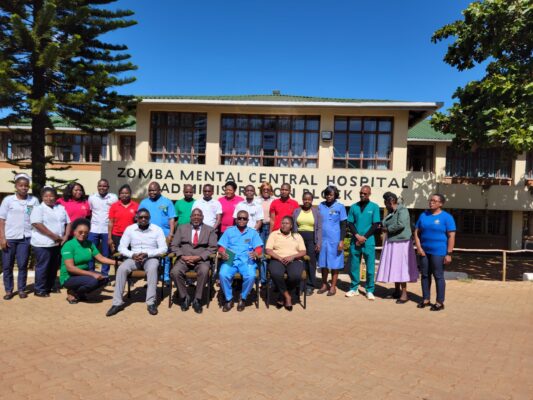
BENCHMARKING VISIT TO ZOMBA MENTAL HOSPITAL
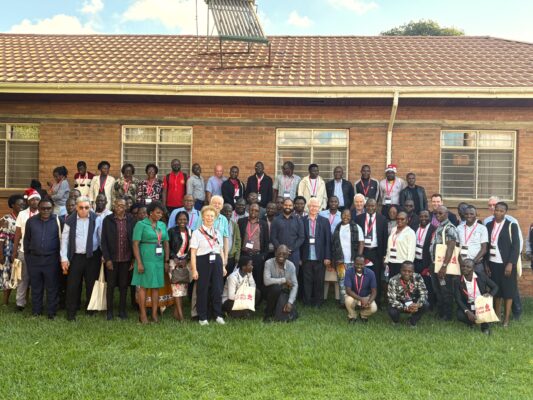
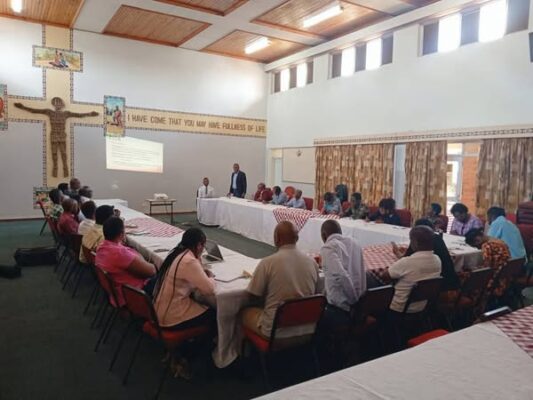
This week, a team from St John of God Hospitaller Services had the privilege of visiting Zomba Mental Hospital, Malawi’s other tertiary psychiatric hospital, for a benchmarking exchange. As the only two facilities of this kind in the country, collaboration and shared learning are vital to advancing mental healthcare in Malawi.
During the exchange visit we shared lessons on how we can improve our services in the following areas: Risk Management, Emergency Response, Use of Technology for monitoring purposes and Staff support to ensure optimal service delivery. On risk management, the two teams shared the risk management tools that they use such as forms and policies and also shared insights on what they can add to enhance safety of both staff and clients. As any hospital, emergency response is critical and on this, the two teams shared the best practices on de-escalation and teamwork during crises. On use of technology for monitoring it was discussed that using CCTV would be an effective way of monitoring clients and staff and also there is need to enhance documentation to improve client care. Finally regarding staff support, discussions emphasized the importance of mental health resources, training, and a supportive work environment to maintain high quality delivery.
This benchmarking visit strengthened the partnership between St John of God of Hospitaller Services and Zomba Mental Hospital, fostering mutual growth in mental healthcare practices. By sharing knowledge and innovative strategies, both institutions are better equipped to address challenges and improve care for their clients. Such collaborations underscore the power of teamwork in advancing mental health services across Malawi, ensuring a safer and more supportive environment for both clients and healthcare providers. We look forward to continued exchanges that drive progress and excellence in mental healthcare.
ST JOHN OF GOD HOSPITALLER SERVICES MALAWI BRANDING
We are happy to announce the new branding of our services, having become part of Hospitaller Services Group Headquartered in Dublin, Ireland. Our new logo consists of the St John of God wordmark and pomegranate symbol. The pomegranate, with its geometric design, is upheld by foliage that symbolises St John of God’s unwavering support to the people who access any of their services. The internal seeds (seeds of hospitality) represent growth and potential for thriving. Within the negative space, the seeds create a discreet cross which is in respect of the heritage of the organisation.


Strengthening Disaster Response Saint John of God Presents Mental Health Findings to DoDMA
When Cyclone Freddy devastated communities in Blantyre and Mulanje, Saint John of God Hospitaller Services, with support from KNH Luxembourg, responded with a vital mental health initiative. Recognizing that true recovery goes beyond physical rebuilding, we implemented Interpersonal Therapy for Groups (IPT-G) to help survivors process trauma, grief, and depression. This evidence-based approach provided a safe space for healing, empowering individuals to regain emotional strength and rebuild social connections.

To ensure long-term impact, we conducted a groundbreaking study on the effectiveness of IPT-G in treating Cyclone Freddy-related depression. The findings, which highlight the critical role of mental health support in disaster recovery, were recently shared with Malawi’s Department of Disaster Management Affairs (DoDMA). During a meeting with Commissioner Charles Kalemba and Chief Disaster Management Officer Natasha Mbengo, we discussed how these insights can shape future disaster response strategies nationwide.
This collaboration marks an important step toward integrating psychosocial care into Malawi’s disaster preparedness plans. By addressing both immediate and long-term mental health needs, we’re helping communities build true resilience. Survivors are not just reconstructing homes they’re restoring hope, dignity, and a sense of possibility for the future.
At Saint John of God Hospitaller Services, we believe recovery begins with healing hearts and minds. Cyclone Freddy left deep scars, but through partnerships, research, and compassionate care, we’re proving that even after the storm, brighter days lie ahead. Join us in supporting this vital work as we help communities rebuild from the inside out.


CHRISTIAN BLIND MISSION (CBM) CEO VISITS SAINT JOHN OF GOD HOSPITALLER SERVICES

Following the successful implementation of the project, Promoting Equal rights, Inclusion, and Community Engagement for Persons with Disabilities in Lilongwe Rural, Mzimba North and Karonga Districts, with funding from Christian Blind Mission (CBM). The project, which was implemented from January 2022 to December 2024, has made remarkable strides in improving the lives of children and youth with disabilities.
The project registered many successes, including assessing, treating, and rehabilitating 1,637 children with disabilities (962 males and 675 females), surpassing the target of 1,450. Among them, 831 children (458 males, 373 females) achieved significant health and developmental milestones, such as walking, sitting, and standing with minimal or no support. Additionally, 334 youths with disabilities (218 males, 116 females) received vocational training in carpentry, bricklaying, and tailoring, with 197 (142 males, 55 females) securing piecework or self-employment after receiving start-up tools a 59% success rate among graduates.
The impact of SJOG’s work was so profound that CBM’s CEO, Dr. Rainer Brockhaus, travelled from Germany to witness it firsthand. During his visit on March 12, 2025, he praised SJOG’s dedication and the transformative outcomes of the CBM-funded project. In his remarks, Dr. Brockhaus reaffirmed CBM’s commitment to disability inclusion and pledged continued partnership, calling SJOG’s efforts “a model of sustainable change.”


ADVOCACY MEETING WITH THE PARLIAMENTARY COMMITTEE ON COMMUNITY AND SOCIAL WELFARE

Saint John of God, in collaboration with Tikondane Child Care and KinderNotHilfe (KNH), hosted the Parliamentary Committee on Community and Social Welfare. This committee is responsible for addressing the challenges faced by vulnerable groups in Malawi, including children, youth, persons with disabilities, women, and the elderly.
During the meeting, the team, led by Saint John of God’s Chief Executive Officer, Dr. Charles Masulani-Mwale, presented a policy brief titled “The Potential Generation Bomb: A Forecast of the Consequences of Failing to Address the Welfare of Street-Connected Children.” The brief highlighted the alarming reality that there are at least 15,000 street-connected children in Malawi, with over 20% being girls living in harsh and unsafe conditions.
The advocacy meeting was timely, as it coincided with Parliament’s deliberations on the upcoming annual budget for the government’s fiscal year. Among the key policy recommendations presented was the need for increased budgetary support to refurbish and operationalize the Lilongwe Rehabilitation Center. Additionally, the team proposed establishing similar facilities in Blantyre and Mzuzu to provide safe havens for street-connected children in these cities.
The Lilongwe Rehabilitation Center, which has not received government funding for the past two years, is currently in a dire state. The proposed funds would address both the center’s refurbishment and its operational costs, ensuring it can effectively serve vulnerable children.
The team also emphasized the importance of capacity building and resource allocation for District Social Welfare Officers, who play a critical role in ensuring children are not forced onto the streets. Furthermore, they urged the committee to address the push and pull factors that contribute to the problem. Push factors include the harsh economic conditions faced by many families, while pull factors include practices such as the distribution of alms, which inadvertently encourage children to remain on the streets.
In his presentation, Chimwemwe Limani, Country Director for KinderNotHilfe, highlighted the impact of climate change on the issue. “The southern region of Malawi has been severely affected by cyclones and floods, leaving many families unable to recover. This has led to an increase in the number of street-connected children. Establishing an operational rehabilitation center in Blantyre is essential to address this growing crisis,” he explained.

Hon. Savel Kafwafwa, Chairperson of the Parliamentary Committee, acknowledged the importance of the meeting, stating, “This interaction has been invaluable in helping the committee identify key issues to bring before the House. We are committed to ensuring that street-connected children receive the support they need to lead safer and more fulfilling lives.”
Dr Masulani-Mwale also shared how Saint John of God Umoza program that can be a model that can be followed since it programming has successfully transformed lives of children connected to the street to citizens contributing to the country as engineers, teachers and doctors some are even employees at Saint John of God.
The meeting underscored the urgent need for collaborative efforts between government, NGOs, and stakeholders to address the plight of vulnerable children in Malawi. By implementing the proposed recommendations, the country can take significant steps toward safeguarding the future of its youngest and most at-risk citizens


FROM FRAGILITY TO FIRMNESS
The arrival of a new child is often a moment of celebration for a family, a time when joy fills the air and community gathers to share in the happiness. For Atupele Molesi, however, the birth of her third child, Zainab, signaled the start of unexpected and challenging journey. A journey full of emotional toll bringing her face to face with harsh realities.

“Instead of receiving support, I was met with judgment and isolation. It was a painful time and I often felt completely alone. Instead of seeing the beauty of a new life, all people saw was a child who was different. It was hard to bear” Molesi recalls with despair.
The hurt of being judged and whispered about was constant. She describes how, with every glance, she could feel the weight of people’s disapproval. “It was as though the community, which should have been a place of love and support, had turned against me,” she says.
Zainab was born with a condition affecting the growth of the skull (medically called Hydrocephalus), leaving her in pain and her future uncertain and her mother’s heart heavy with a mix of love and concern. Hydrocephalus is a rare disorder, requires both immediate and long-term medical attention, something that Molesi was determined to secure for her daughter. “I just wanted to see my daughter grow like any other child,” she says softly. I wanted her to run and play without pain and have the same opportunities as every other child.
In search of hope, Molesi reached out to organisation’s that specialize in supporting children with rare medical conditions. Though Zainab underwent surgery at Mangochi District Hospital, she still needed extensive care which included long-term physiotherapy as part of her recovery. Her journey took a positive turn when Zainab was enrolled in a programme designed to rehabilitate children with disabilities.
“When I first learned about the initiative, I felt hope in a way that I hadn’t felt in months,” Molesi says with her face brightening. “It wasn’t going to be easy but this programme offered something no one else could which was a real chance for Zainab to get the long-term care which Zainab needed.”
St John of God Hospitaller Services, with support from KinderNotHilfe (KNH), is running an Early Intervention project in Lilongwe. The project focuses on promoting and protecting the rights of children with disabilities and also provides essential support to them.
Zainab’s life began to change as the healthcare professionals from St John of God worked tirelessly to provide the necessary care that she needed. “Each child’s journey is unique but with early intervention, we can give them the support they need to thrive. Zainab has made remarkable progress. She has gained more control over her body and is becoming more independent.” says Precious Nkosi Phiri, Physiotherapist at St John of God. She further states that physiotherapy is more than just exercises. “During our physiotherapy sessions we focus on building strength, improving balance and increasing the range of motion. If a child has difficulty with fine motor skills, we use specific exercises to improve coordination and dexterity,” Phiri further elaborates.
From the very start of the Zainab’s enrolment in the programme, her progress has been noticeable. Phiri stresses the importance of parental involvement in the healing process: “We teach parents simple exercises to reinforce what we work on in the clinic. Consistency is key to making progress.” Molesi has taken on the role of Zainab’s physiotherapist at home, where the comfort and familiarity of their surroundings provide a foundation for healing. She understands the importance of patience and persistence. “The journey for her full recovery will take a long time and I have made peace with this but I also know that with my love and dedication no road is too hard to travel” she says. Zainab’s progress has been slow but certainly undeniable. “Every day, I see her becoming stronger. I never thought I would witness some of the milestones she has already achieved,” Molesi reflects with a mix of joy and disbelief.
In addition to her mother’s support, Zainab is fortunate to have Levison Kumchulesi, her stepfather, by her side. His dedication to the family is unwavering, even in the face of ridicule from their community. “I will always be there for her, no matter what others say. People may have opinions about our situation but my focus is on what is best for Zainab,” Kumchulesi asserts.
His care for Zainab goes beyond physical therapy he is deeply involved in managing her medical appointments and ensuring she continues to receive appropriate care. In the program by St John of God, the process of identifying children who need specialized care begins with careful outreach.
Ndaonga Mkandawire a medical rehabilitation technician at St John of God explains how the programme works as follows. “Through community visits, outreach clinics and engaging stakeholders such as healthcare practitioners from health centers, clinics and hospitals across Lilongwe. We also train volunteers within various communities of Lilongwe to recognize signs of disabilities in children. Whether physical, cognitive or developmental. These volunteers help us connect with families who might not be aware of the services available to them.”
‘Without the dedicated network of volunteers, many children would miss out on the vital early care that make all the difference,” says Mkandawire. For children with disabilities, every small step towards recovery is a monumental achievement. From their first independent movement to their first word, each milestone is a testament to the boundless potential within every child. Molesi sees the positive changes in Zainab every day. Finally for the dedicated physiotherapists, rehabilitation technicians, volunteers and parents working behind the scenes, there is no greater reward than witnessing a child achieve something once thought to be impossible. They say each milestone is a triumph not only for the child but for everyone involved in their journey.
Recent Posts
Recent Posts
-
 Partners Unite to Commemorate World Mental Health Day October 14, 2026
 -
 BEYOND VULNERABILITY: EMPOWERING THE NEXT GENERATION October 12, 2026
 -
-
-
 HSG Newsletter Second Edition June 15, 2026
Recent Comments